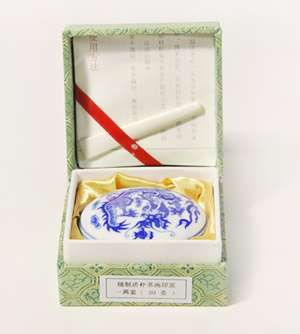
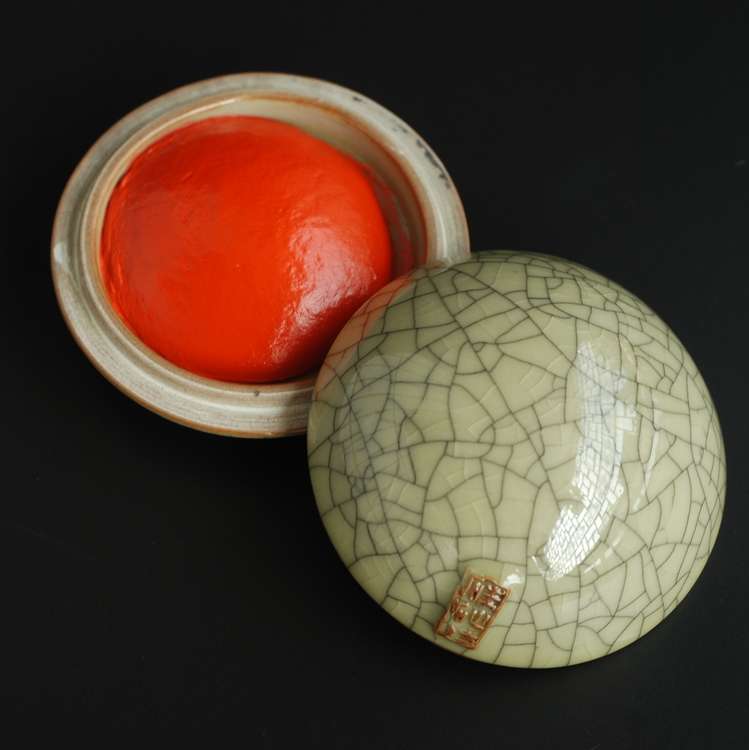
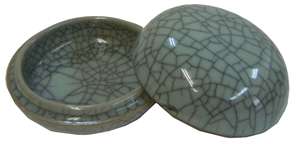
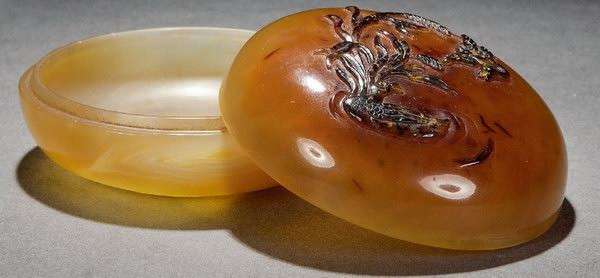
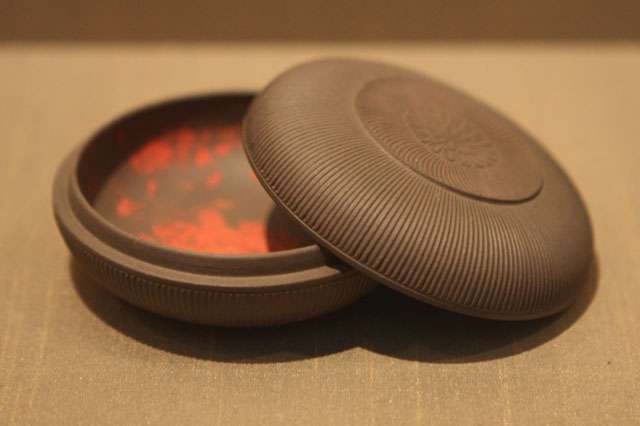
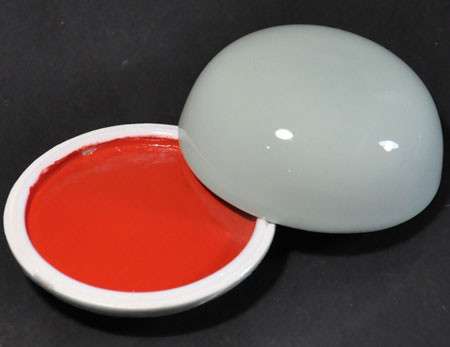
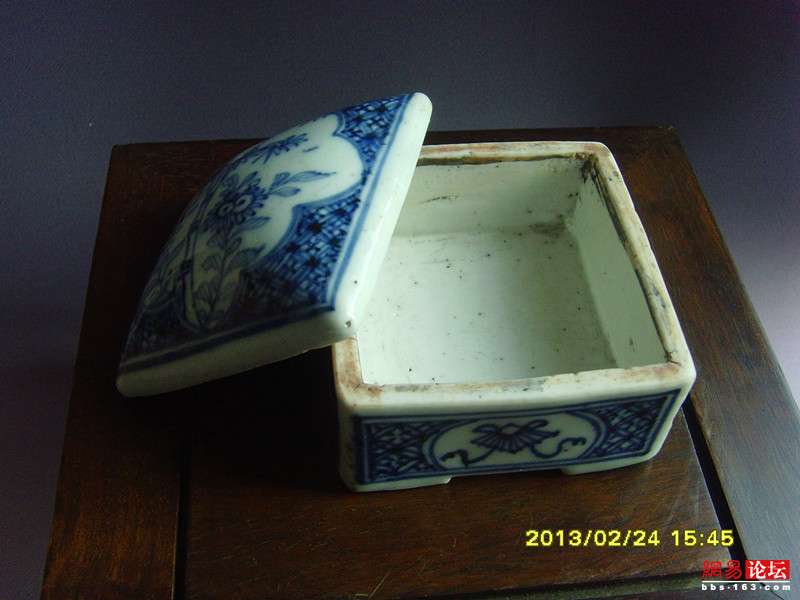
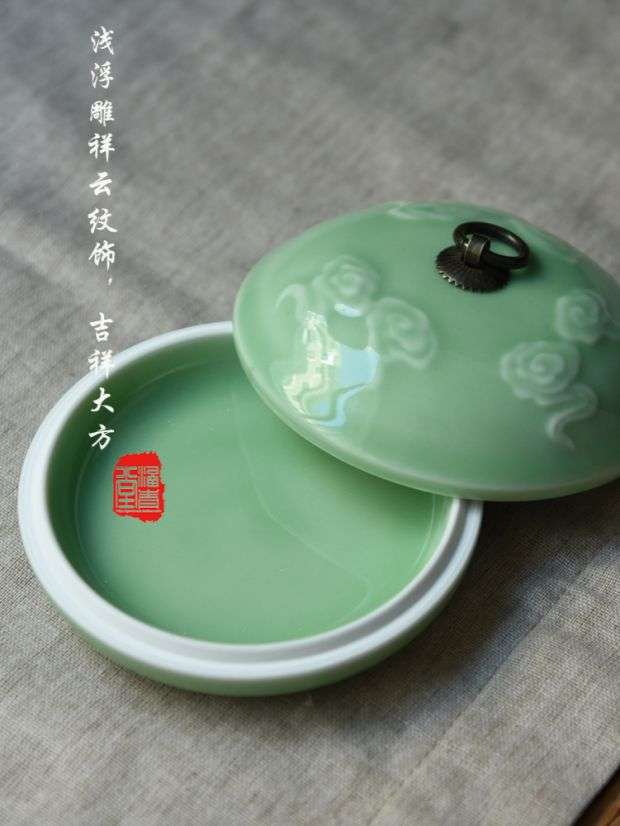
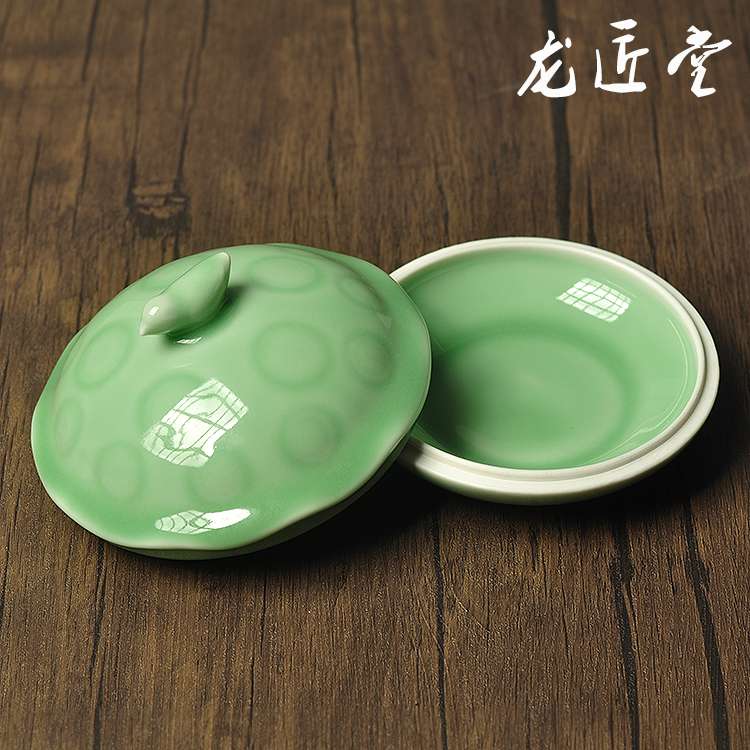
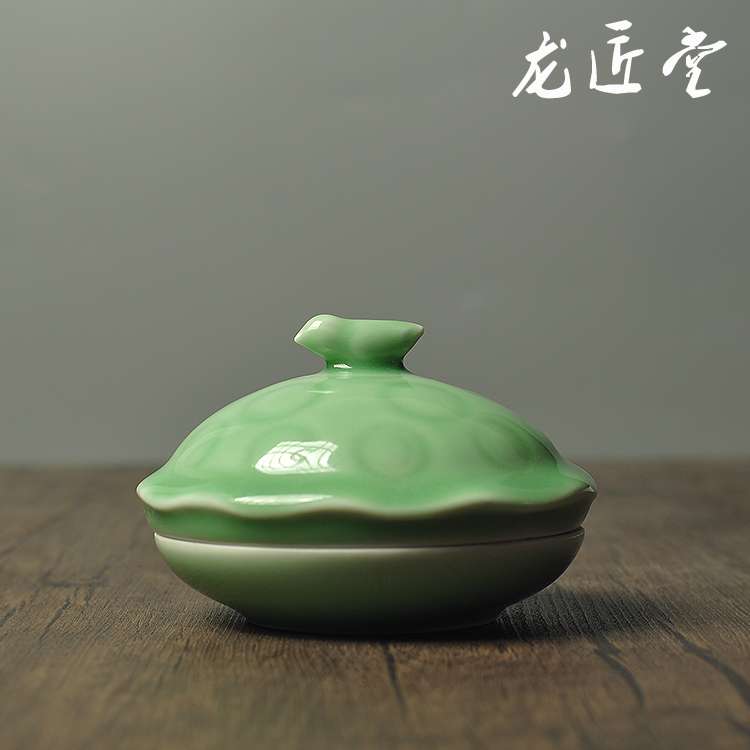
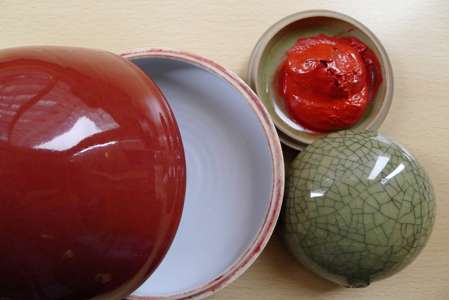
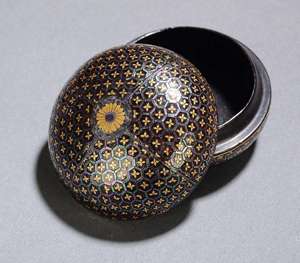
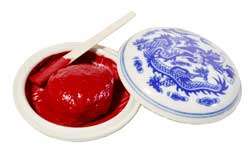
Store your seal ink in a non-porous container. In Chinese these are called yinnihe 印泥盒. Porcelain is most commonly used in China though any glazed ceramic, glass, lacquer, or metal container can be used—anything that doesn’t absorb the oil from the ink and dry it out. The container’s lid doesn’t need to be airtight, but do keep the lid on when not in use so the ink won’t dry out. And, since good quality ink in a lidded container can last for many years, find a functional container you can enjoy.
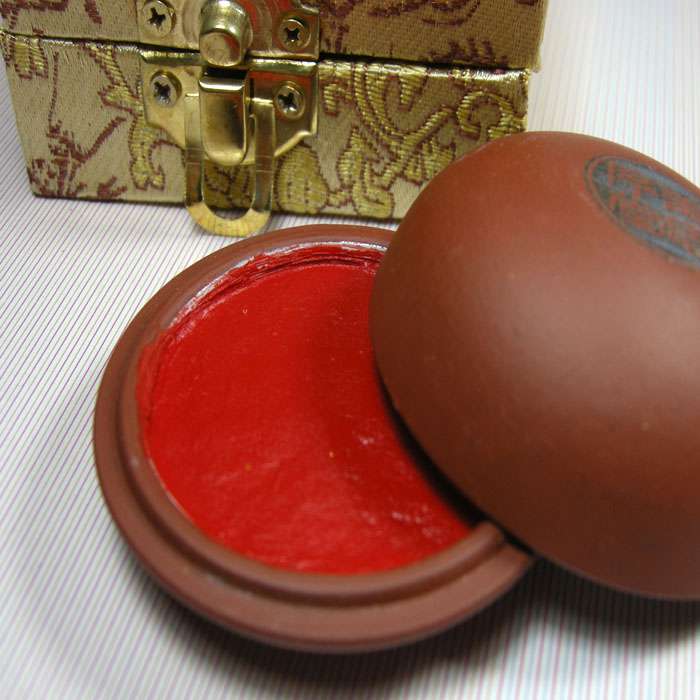
Quality ink often comes in a container with a padded, decorative box and may include a seal paddle for stirring the ink.
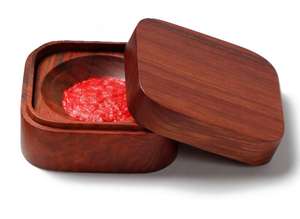
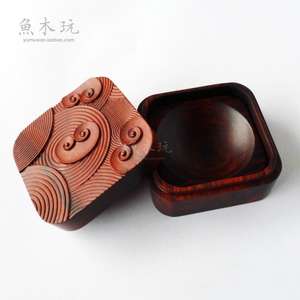
A wooden box, although pretty, isn't a good idea for holding seal ink as the wood will absorb the oil and dry out the ink. Only use this kind of container if it's well sealed.
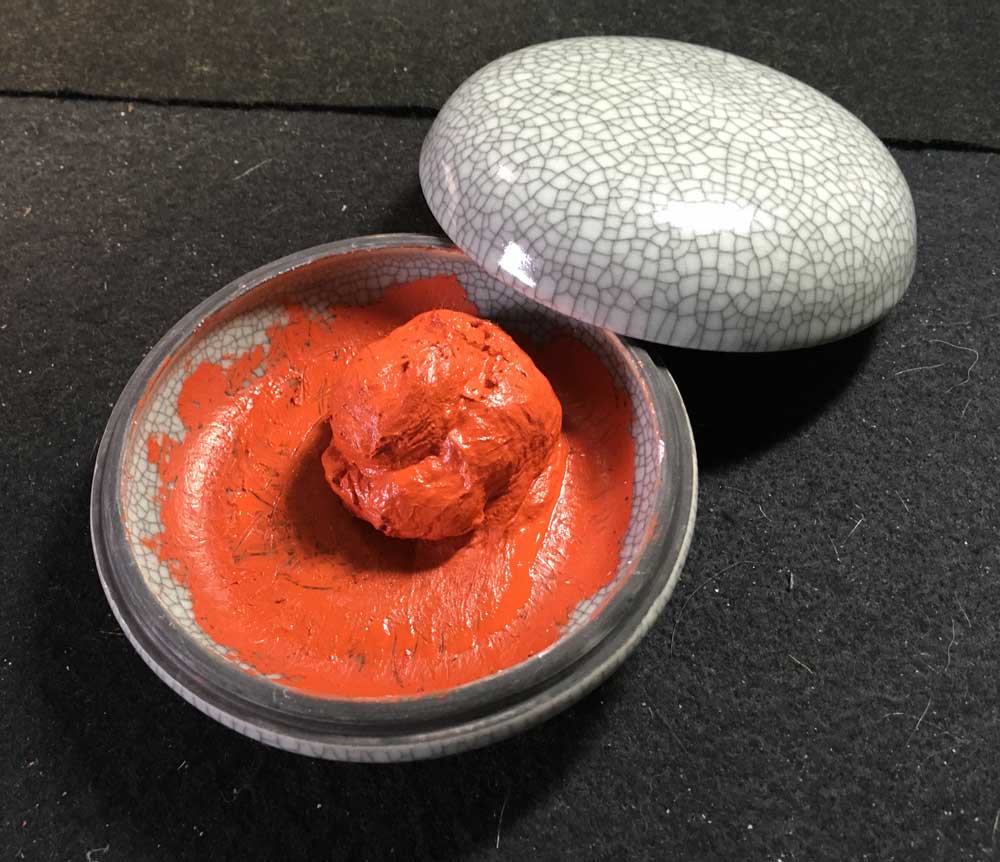
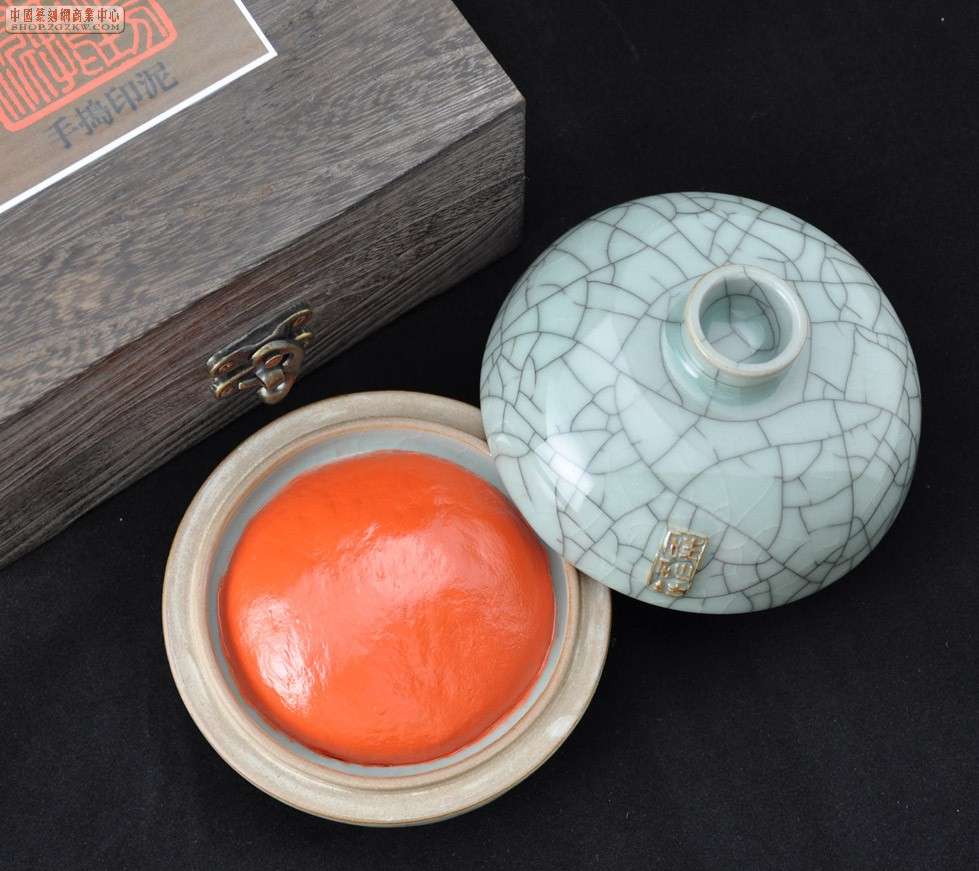
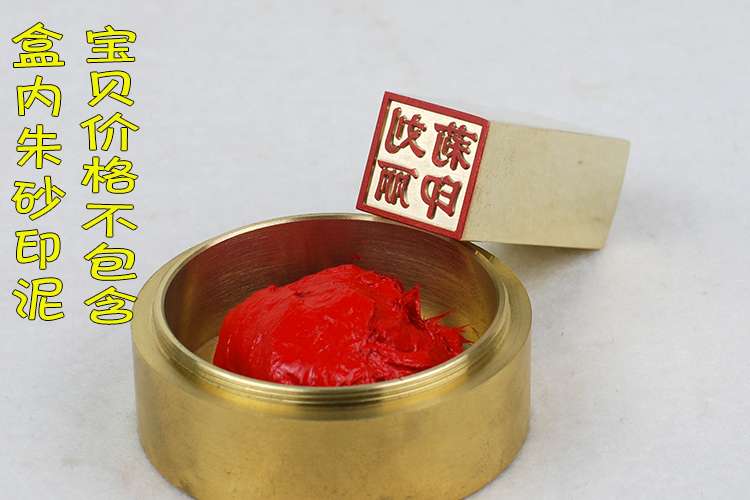
Here are more examples from the infinite variety and sizes of ink containers. Wood and unglazed pottery are poor choices as they allow the ink to dry out. Someone once told me not to use metal as it can interact with the ink. I recommend using a large container with a tall lid—your stone might chip if it hits the edges of a small container and ink may get onto the inside of a shallow lid.
Yan Luo from Inkston comments: “Just one comment I would like to make on the seal paste container. I have read your articles, which are very good. However, you said that the metal container can also be used. I do not agree. In fact, for handmade professional seal pastes, we should avoid using any metal container/mixer because the metal will damage the paste. Slowly, the seal paste will become very dark. There are chemical reactions.
The best material to hold/ mix/ care handmade seal paste are: jade, porcelain, and glass. The best materials for the mixer (the tiny stick) can also be bone (especially ivory).”
One Response
Yan Luo from Inkston comments:
“Just one comment I would like to make on the seal paste container. I have read your articles, which are very good. However, you said that the metal container can also be used. I do not agree. In fact, for handmade professional seal pastes, we should avoid using any metal container/mixer because the metal will damage the paste. Slowly, the seal paste will become very dark. There are chemical reactions.
The best material to hold/ mix/ care handmade seal paste are: jade, porcelain, and glass. The best materials for the mixer (the tiny stick) can also be bone (especially ivory).”