Wu Xizai 吳熙載 (1799-1870) was born in Nanjing but moved to Yizheng, Jiangsu province with his parents. Originally named Wu Tingyang, he used the artistic names of Rangweng and Rangzhi. Wu was a painter, calligrapher, and seal carver and was a student of the calligrapher Bao Shichen, “who in turn studied with Deng Shiru. According to Wu himself, he began to study Han seals at the age of fifteen; after fifteen years, he discovered the seal engraving of Deng Shiru and devoted himself to learning from Deng … His seals in white characters (baiwen) tended to follow the monumental style of Han-dynasty sinuous seal script. His red-character impression (zhuwen) seals, however, tended to emphasize the flavor of the pliant brush. In his knife techniques, he combined thin and thick strokes to achieve a more varied effect.” [I’ve misplaced the source of this quote, but when I come across it again I’ll include it here.] It’s said he carved more than ten thousand seals during his lifetime.
Sun Weizu says this about him, “Wu used the graving knife swiftly and skillfully, with a light, shallow touch. When initiating, closing or turning the knife, he concentrated on his feeling or mood and the sharp edge of the knife. Therefore, the rhythmic variations of the lines are smooth and natural, without any loss of simple vigor and luxuriance.” This is typical of Chinese art criticism in general—very flowery but without much substance and without much relevance to the actual work of art described.
Here’s a seal by Wu found in the Shanghai Museum with the stamped impression, the stone, and the side inscription. The four characters (untranslated) are 包氏伯子 inscribed from top right to bottom right and then top left to bottom left.
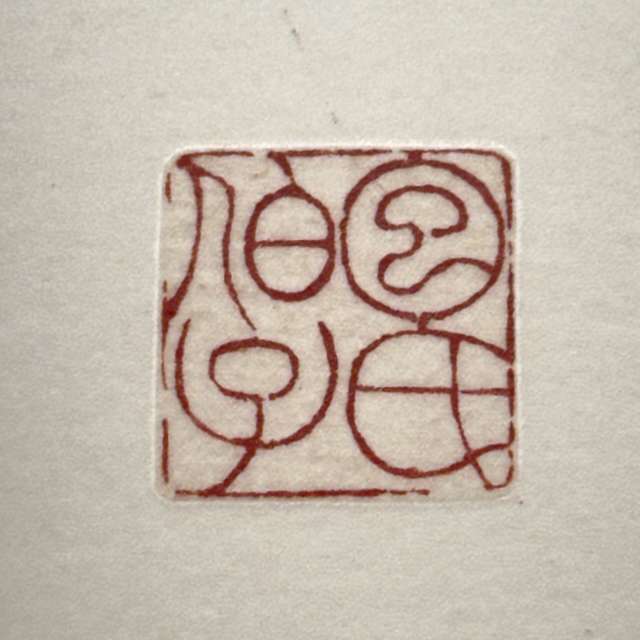
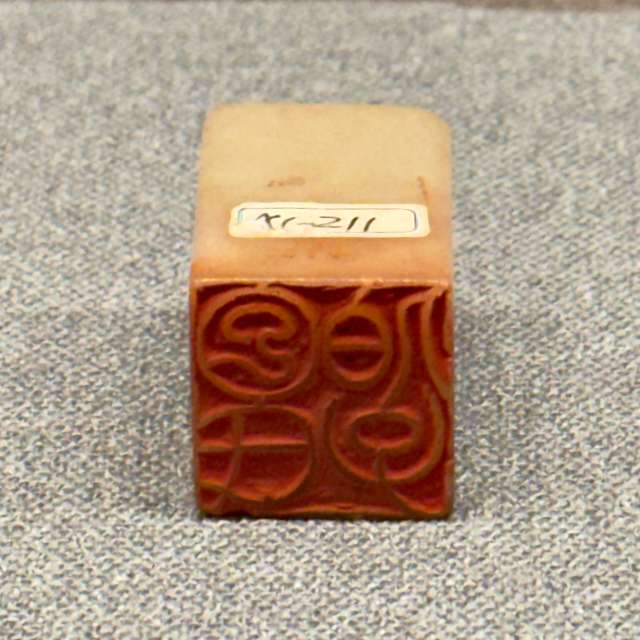
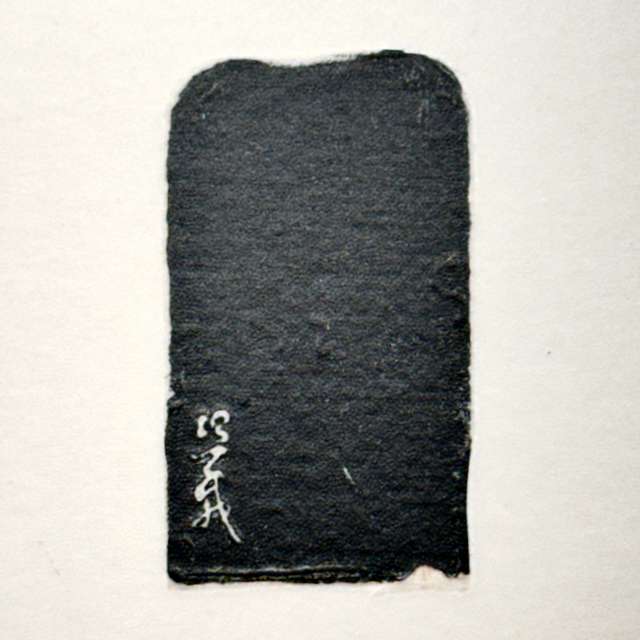
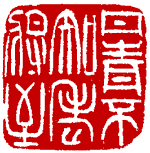
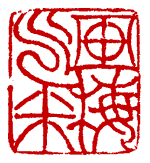
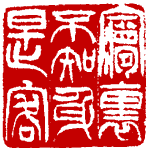
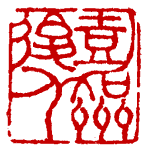
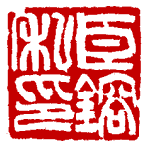
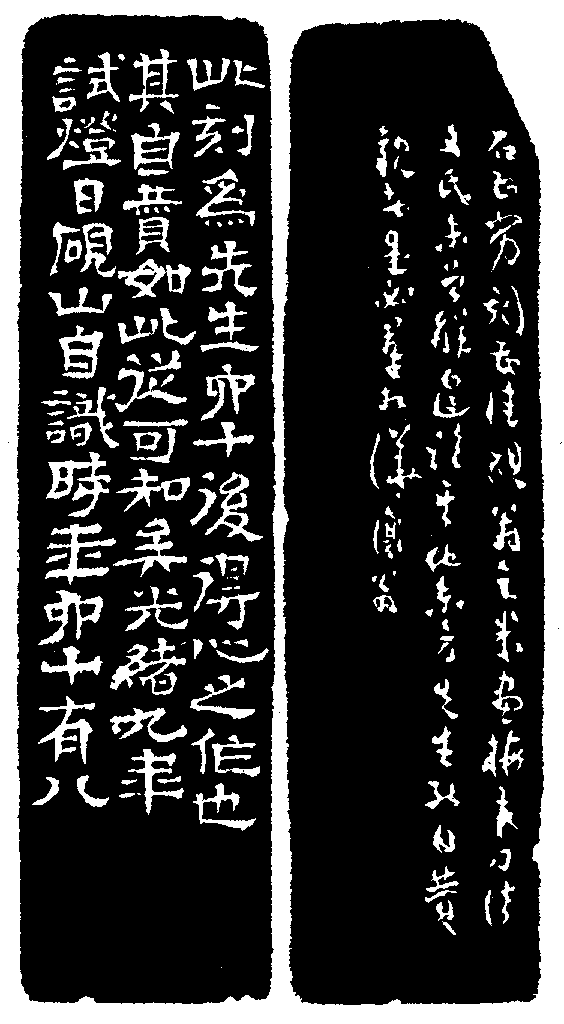
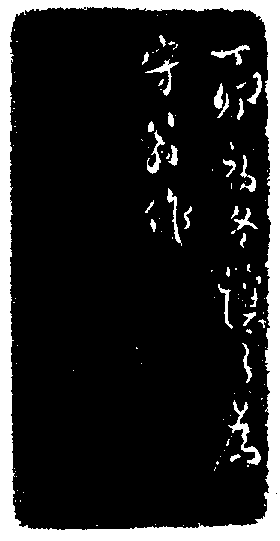
Here’s a few more images of his work. You can see from these that he carved in different styles.

- Pinyin: Wú Xīzài
- Wade-Giles: Wu Hsi-tsai