Seal Ink Container Size
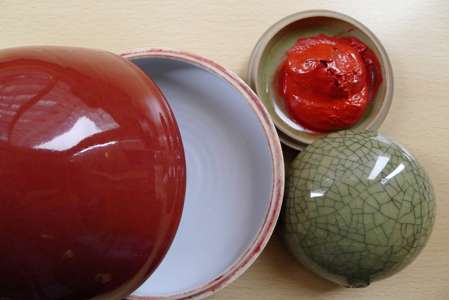
For your studio be generous in the size of your seal ink container.
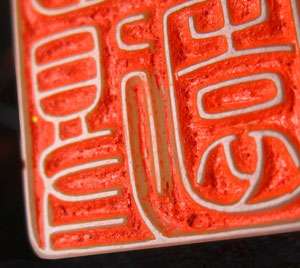
Cleaning Your Seal
The traditional way to clean a seal is, after use, to simply stamp it over and over on to scrap paper until nothing more appears.
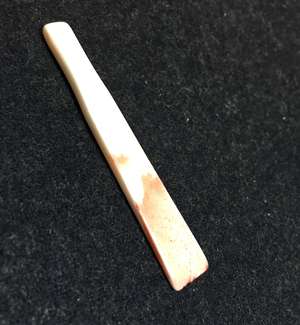
Seal Paddle
Good quality seal ink is often sold along with a small paddle called, in Chinese, yinzhu 印箸 or “seal chopsticks.”
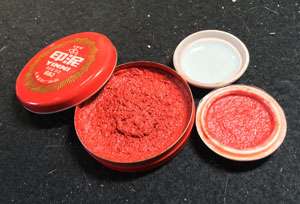
Flat Ink
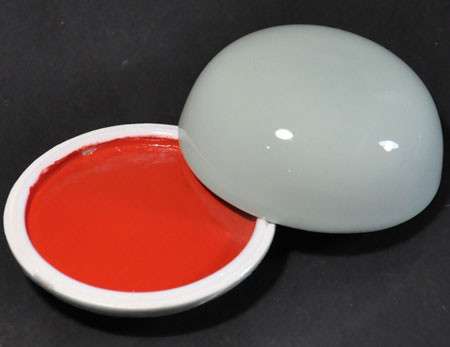
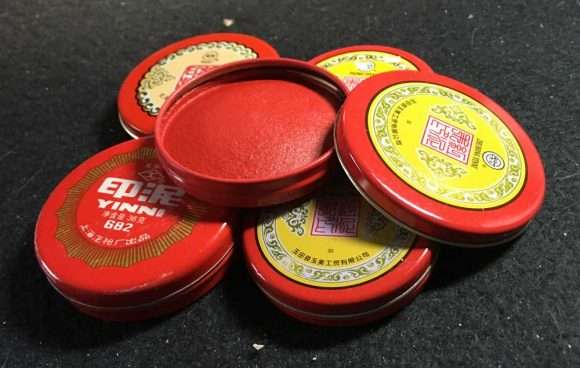
There are several problems with the seal ink commonly sold in small flat tins or in small, shallow ceramic bowls.
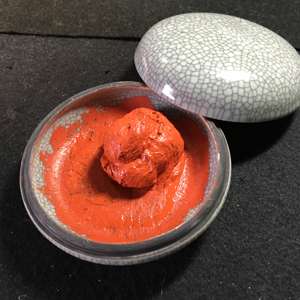
A Ball of Ink
If you roll your seal ink into a ball you are much less likely to pull fibers from the ink.
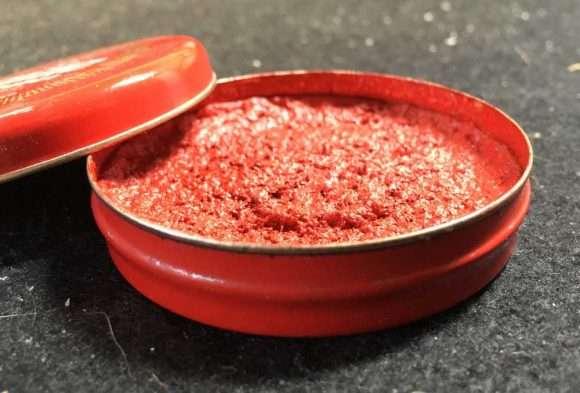
Oil-based Seal Ink
The third main ingredient of seal ink, along with color and binder, is oil.
Use Quality Ink
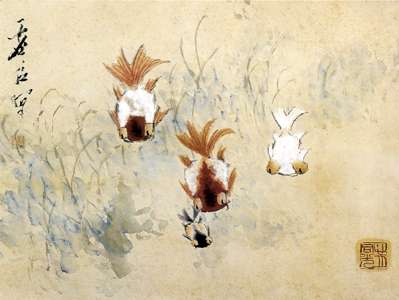
You will want to use the best quality seal ink you can find and/or afford.
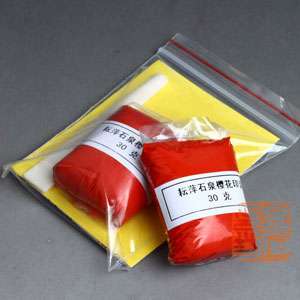
Seal Ink Packets
Seal ink sold in packets is relatively moist, as opposed to ink sold in tins which is usually harder and dryer.
Corner Seals
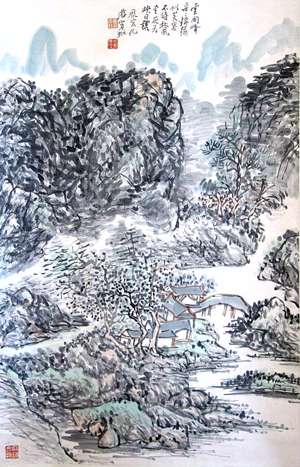
Bottom corner seals (In Chinese yajiaozhang 押角章) are just as the name implies—seals placed to mark the corners of the finished artwork.